Dust mites are tiny creatures found in almost every home, yet most of us rarely think about them.
They are too small to see with the naked eye, measuring approximately 0.2–0.3 mm, and are commonly found in mattresses, pillows, bedding, carpets, and upholstered furniture.
Although we cannot eliminate them completely, we can make our homes less suitable for them and reduce our exposure to the allergens they leave behind.
My interest in dust mites goes back to 2006, when I was doing an internship with a holistic practitioner in my hometown in Denmark. During that time, I was introduced to several practical ways of reducing dust mites in the home.
Many of those recommendations are still relevant today, while others deserve a closer look as our understanding of allergies, skin health, and indoor environments continues to develop.
From a holistic perspective, I believe it is worth looking beyond the dust mites themselves. Our indoor environment, skin health, humidity, and everyday habits are all connected.
What Are Dust Mites, and What Do They Feed On?
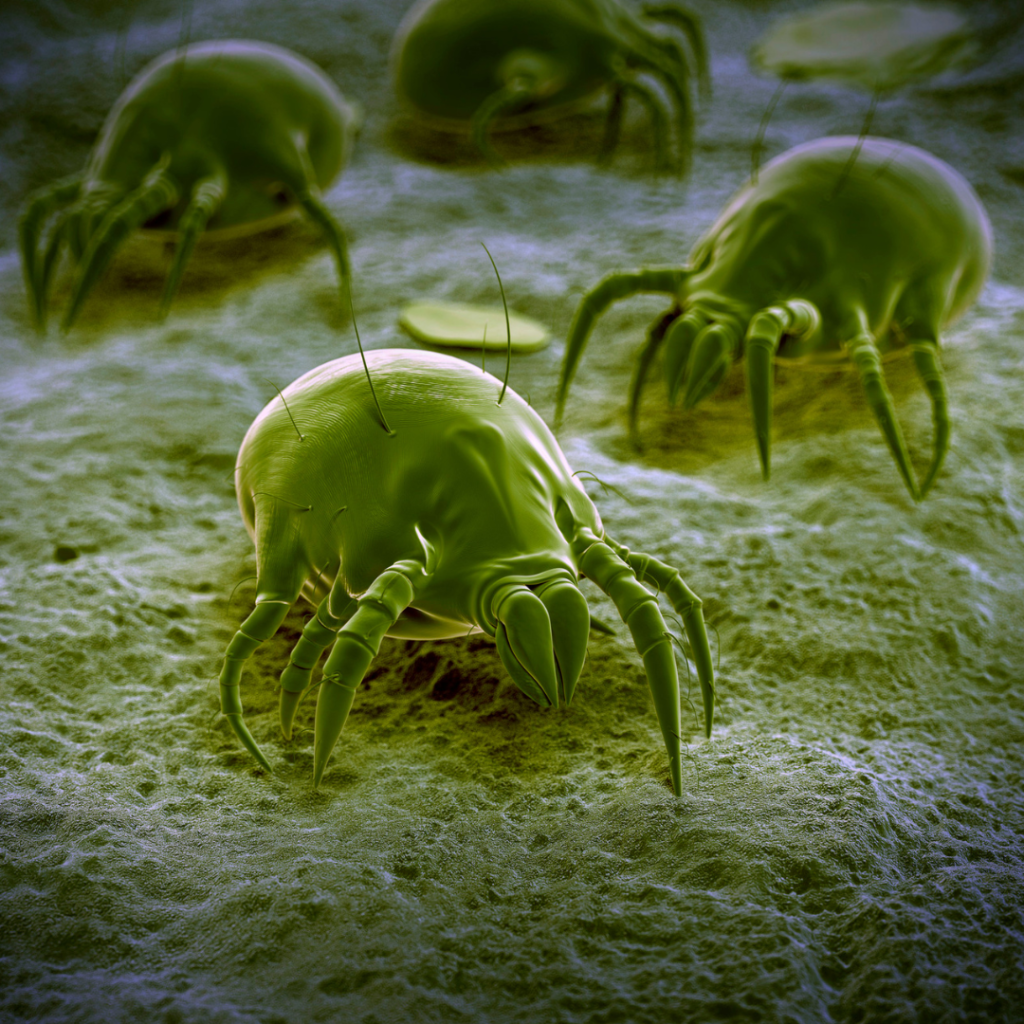
Dust mites are microscopic relatives of spiders. Unlike some other mites, they do not bite, burrow into our skin, or live on our bodies.
Instead, they feed primarily on dead skin cells that humans and animals naturally shed.
They thrive in warm, humid environments, particularly where moisture and food are readily available.
This explains why our bedrooms are especially attractive to them. During sleep, we shed skin cells and release moisture through perspiration and breathing. Mattresses, pillows, and bedding can retain some of that moisture, creating favorable conditions for dust mites.
Dust mites absorb moisture from the surrounding air, which makes indoor humidity one of the most important factors in their survival.
Why Dust Mites Can Trigger Allergies
Interestingly, it is not dust mite bites that cause allergic reactions.
The problem comes primarily from proteins found in their droppings and body fragments. These particles become part of household dust and can be inhaled or come into contact with sensitive tissues.
For someone with a dust mite allergy, the immune system recognizes these otherwise harmless proteins as a threat and responds with an allergic reaction.
Common symptoms include:
- Sneezing and a runny or stuffy nose
- Itchy, watery, or irritated eyes
- Nasal congestion, particularly in the morning
- Coughing or throat irritation
- Wheezing or worsening asthma symptoms
- Itchy, inflamed skin or eczema flare-ups in some individuals
These symptoms can have several causes, so persistent problems should be evaluated by a healthcare professional. Allergy testing can help identify specific triggers.
For more information, see the American College of Allergy, Asthma & Immunology’s guide to dust allergies.
The Connection Between Dust Mites and Skin Health
Our skin is constantly renewing itself, naturally shedding dead cells throughout the day and night.
These cells provide a food source for dust mites, particularly in our bedding.
But the connection between dust mites and skin health goes further.
Research has shown that certain dust mite allergens can affect the skin’s protective barrier and contribute to inflammation and itching, especially in people with eczema or existing sensitivities.
When the skin barrier is compromised, it becomes more vulnerable to irritation and environmental allergens.
This is one reason I believe skin health deserves attention when we look at our overall indoor environment.
What About Dry Brushing?
Dry brushing is a traditional practice that gently exfoliates the skin, removing loose, dead skin cells before showering.
Since dust mites feed on shed skin cells, removing some of these cells before bedtime could theoretically reduce the amount that ends up in our bedding.
It is a reasonable connection to consider, although research has not established whether dry brushing meaningfully reduces dust mite populations or allergy symptoms.
For those who enjoy dry brushing and have healthy, tolerant skin, it can be part of a personal-care routine.
However, I would not recommend it on irritated, inflamed, broken, or eczema-prone skin, where friction can further compromise the skin barrier.
Gentle cleansing and regular moisturizing are more important for maintaining a healthy skin barrier.
Why Dust Mites Can Become More Noticeable in Fall
We often associate seasonal allergies with pollen outdoors, but indoor allergens deserve attention too.
Dust mites thrive during warm, humid periods, particularly throughout summer.
As we move into fall, allergens that have accumulated in bedding, carpets, and furniture can remain present even as temperatures begin to drop.
We also tend to spend more time indoors, increasing our exposure to household allergens.
Unlike ragweed and other seasonal pollen, dust mite allergens can cause symptoms throughout the year.
Practical Ways to Reduce Dust Mites at Home
Controlling dust mites does not require constant cleaning or replacing everything in your home.
I prefer to focus on the conditions that allow them to thrive and make practical changes where they matter most.
1. Start With the Bedroom
Because we spend several hours in bed each night, the bedroom is an important place to begin.
Wash sheets, pillowcases, and washable blankets weekly. Water temperatures of at least 130°F (54°C) help kill dust mites.
Use allergen-proof, zippered mattress and pillow covers designed specifically for dust mites.
There is no need to automatically discard all feather or wool bedding. Consider whether items can be washed properly or protected with suitable covers.
2. Keep Indoor Humidity Under Control
Humidity plays a major role in dust mite survival.
Keeping indoor relative humidity around 30–50%, preferably below 50%, helps make the environment less favorable for them.
A small humidity meter, or hygrometer, can help you monitor conditions.
In humid climates, air conditioning or a dehumidifier can be particularly useful.
Remember that excessive humidity also encourages mold growth, another common indoor allergen.
3. Clean Without Stirring Up Unnecessary Dust
Regular cleaning helps reduce allergen buildup, but how we clean matters.
Dry dusting, sweeping, and vacuuming can temporarily send allergens into the air.
Instead:
- Use a damp microfiber cloth for dusting.
- Vacuum carpets and upholstered furniture with a HEPA-filter vacuum.
- Wash washable rugs regularly.
- Keep unnecessary clutter to a minimum, particularly around the bed.
- Consider hard flooring instead of wall-to-wall carpeting if allergies are a significant concern.
If you are particularly sensitive to dust, having someone else vacuum or staying out of the room while airborne dust settles can help reduce exposure.
4. Maintain Heating and Air Conditioning Systems
Heating and air conditioning systems can circulate airborne dust and allergens when filtration and maintenance are inadequate.
Clean or replace filters according to the manufacturer’s recommendations, and keep vents and surrounding areas clean.
Good filtration can reduce airborne particles, although it cannot remove dust mites living deep inside mattresses and furniture.
5. Pay Attention to Ventilation
Fresh air is an important part of maintaining a comfortable indoor environment, but opening windows is not always the best solution.
During periods of high pollen counts, outdoor smoke, or excessive humidity, keeping windows closed may be preferable.
The goal is to maintain good indoor air quality without introducing additional irritants or moisture.
6. Support the Skin Barrier
Healthy skin provides an important protective barrier between our bodies and the environment.
Gentle cleansing, appropriate moisturizing, and avoiding unnecessary irritation can help maintain that barrier.
If you have eczema or very dry skin, pay particular attention to products and practices that aggravate your symptoms.
And remember, more exfoliation is not necessarily better.
Looking at the Bigger Picture
Dust mites are a natural part of our indoor environment, but that doesn’t mean we should ignore the conditions that allow them to multiply.
From a whole-person perspective, I find it helpful to connect the dots between our surroundings, skin health, allergic responses, and everyday habits.
Sometimes improving our environment involves small adjustments rather than major changes.
Start with your bedroom, pay attention to humidity, maintain your bedding, and consider how your skin responds to different conditions.
We cannot control every allergen around us, but we can take practical steps to reduce unnecessary exposure and create a healthier home.