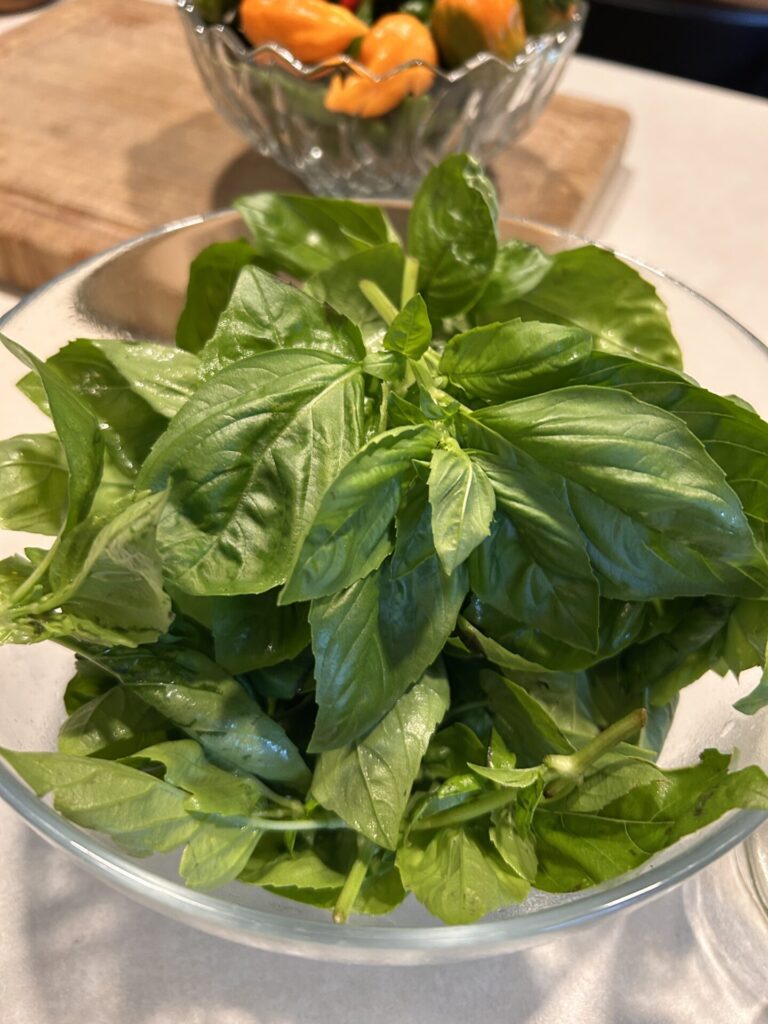
Fresh basil has been thriving in my garden this summer, and every time I harvest a basketful, I’m reminded just how versatile this wonderful herb is. While pesto is always a favorite, I wanted to create something a little different—a creamy, fresh, and vibrant green sauce made with simple ingredients I already had in my kitchen.
The result was even better than I expected.
This Creamy Green Basil Sauce is smooth, flavorful, and incredibly versatile. Toss it with pasta, drizzle it over roasted vegetables, spread it on sandwiches or wraps, spoon it over grilled chicken or fish, or use it as a dip for fresh vegetables. Whether you grow your own herbs, shop at your local farmers market, or simply pick up a bunch of fresh basil at the grocery store, this recipe is a wonderful way to enjoy the flavors of summer.
For me, the best meals begin with simple, wholesome ingredients. Fresh herbs, leafy greens, healthy fats, seeds, and real food have been nourishing people for generations. I believe every meal is an opportunity to give our bodies the nutrients they need to maintain balance and function the way they were designed to.
Why I Love This Recipe
Stepping outside to harvest fresh herbs is one of my favorite parts of gardening. It reminds me that some of the best meals don’t start at the grocery store—they start right outside the back door.
This recipe is a perfect example of how a few fresh, wholesome ingredients can become something truly delicious. It’s simple to make, full of fresh flavor, and easy to adapt with whatever vegetables you have on hand.
Healthy Made Simple
What I love most is that every ingredient brings its own unique nutrients and plant compounds to the table. While no single food does it all, together they provide a wide variety of vitamins, minerals, healthy fats, antioxidants, and beneficial plant compounds that help support the body’s natural functions.
Basil
Basil is much more than a flavorful herb. It contains eugenol, rosmarinic acid, linalool, and flavonoids, plant compounds that help protect our cells from oxidative stress and support the body’s natural inflammatory response. It’s also a good source of vitamin K for healthy bones and vitamin A to support healthy vision and immune function.
Spinach
Spinach is rich in vitamins K and C, folate, and magnesium, nutrients that help support healthy bones, collagen production, muscles, energy, and the nervous system. It also contains lutein and zeaxanthin, which help support healthy eyesight.
Garlic
Garlic contains allicin, a naturally occurring sulfur compound valued for supporting the body’s natural defenses and overall cardiovascular wellness. It also provides selenium, manganese, and vitamin B6, nutrients involved in energy production and antioxidant protection.
Sunflower Seeds
Sunflower seeds are an excellent source of vitamin E, which helps protect our cells from oxidative stress. They also provide magnesium, selenium, and healthy unsaturated fats that support the heart, brain, muscles, and thyroid.
Extra Virgin Olive Oil
Extra virgin olive oil is rich in monounsaturated fats, especially oleic acid, which supports heart health. It also contains antioxidant polyphenols, including oleuropein and hydroxytyrosol, that help protect our cells and support overall wellness.
Full-Fat Greek Yogurt
Greek yogurt provides protein to support muscles and tissue repair, along with calcium for healthy bones and teeth. If it contains live cultures, it also helps support a healthy gut microbiome, an important part of digestion and immune function.
Fresh Lemon Juice
Fresh lemon juice is a wonderful source of vitamin C, which supports collagen production, healthy skin, connective tissue, and immune function. It also helps improve the absorption of the plant-based iron found in spinach.
I don’t believe there’s one magic ingredient that creates good health. I believe our bodies thrive when we consistently nourish them with a variety of real, whole foods. Every herb, vegetable, healthy fat, and seed contributes something unique, and together they provide the nutrients our bodies need to maintain balance and support everyday health.
Mindful Living
Preparing meals from scratch can be more than simply making dinner—it can become part of living a healthier, more balanced life. Slowing down to harvest fresh herbs, chop vegetables, squeeze a fresh lemon, and enjoy the colors and aromas in your kitchen reminds us to be present in the moment.
For me, cooking with fresh ingredients is another way to practice gratitude. It reminds me to appreciate what the garden provides, to enjoy the process as much as the meal, and to nourish both body and mind with simple, wholesome food.
If this way of living speaks to you, I invite you to read my Healthy Made Simple blog post, where I share simple ideas for slowing down and finding more balance in everyday life.
Creamy Green Basil Sauce Recipe
Ingredients
- 1 cup (2.5 dl) packed fresh basil
- 1 cup (2.5 dl) loosely packed fresh spinach
- ⅓ cup (0.8 dl) sunflower seeds
- ⅓ cup (0.8 dl) full-fat Greek yogurt
- 5 tbsp (75 ml) extra virgin olive oil
- 2 small garlic cloves
- 1 tbsp (15 ml) fresh lemon juice
- ½ tsp sea salt, or to taste
- Freshly ground black pepper
Instructions
- Add all the ingredients to a food processor or high-speed blender.
- Blend until smooth and creamy.
- Taste and adjust the seasoning if needed. Add a little more lemon juice for extra freshness, a little more olive oil for a richer flavor, or 1–2 tablespoons (15–30 ml) of cooled pasta water if you’d like a thinner consistency.
- Refrigerate the sauce for 20–30 minutes before serving to allow the flavors to blend together.
- Enjoy it tossed with pasta, drizzled over roasted vegetables, spread on sandwiches or wraps, spooned over grilled chicken or fish, or served as a dip with fresh vegetables.
Storage
Store the sauce in an airtight container in the refrigerator for up to 3 days. Because it’s made with fresh herbs and Greek yogurt, it’s best enjoyed fresh.
If the sauce thickens after refrigeration, simply stir in a splash of olive oil, water, or cooled pasta water until it reaches your desired consistency.
Tip: Double the recipe and freeze it in small portions. It makes an easy addition to pasta, wraps, sandwiches, grain bowls, or roasted vegetables. If the sauce separates slightly after thawing, simply stir or blend it for a few seconds, and it’s ready to enjoy.
If you’d like to learn more about growing, harvesting, preserving, and cooking with herbs, you can find my Herb Book on Amazon, where I share simple ways to make herbs a natural part of everyday life.